Global
 BackBackBackBackBackBackBack
Offering for Automotive Industry
Optimize your automotive business with our comprehensive solutions. Streamline operations, enhance customer experiences, and integrate sales and after-sales functions seamlessly.
Explore Automotive IndustryBI & Analytics
Combining data from various sources, analysing data, and utilising it to support decision-making provides competitive advantages our customers.
Explore BI & AnalyticsCustomer Online
Customer online solutions enable customers to interact, engage, and access services provided by a company through online channels. Our solutions enable customer interaction and service with easy-to-use self-service portals for customers.
Customer Information System
Customer Information Systems (CIS) store, manage, and provide access to customer-related data for businesses. These systems centralize customer information, such as contact details, purchase history, preferences, and interactions. CIS enables businesses to gain valuable insights, enhance customer service, personalize experiences, and support decision-making. Start building relationships with your customers.
eCommerce
eCommerce services deliver versatile expertise to help businesses thrive online. With a focus on customer experience, we provide tailored solutions and top-notch performance. Our services encompass consulting, design, implementation, and support for B2B and B2C businesses.
We prioritize usability, search capabilities, and technical functionality to enhance sales. Partnering with industry-leading technologies like Adobe Commerce and HCL Commerce, we tailor ecommerce solutions to meet individual needs and maximize success in the digital marketplace.
Explore eCommerce services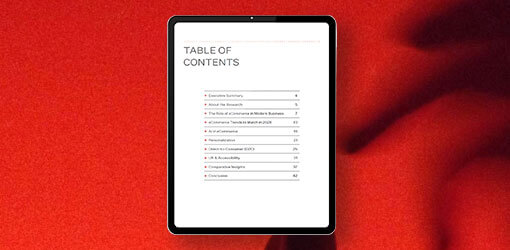
Integration services
Streamline your business operations with our Integration services. Seamlessly connect applications and systems, boost efficiency, and ensure smooth data exchange.
Explore Integration servicesDevelopment services
Together with industry expertise and up-to-date software skills we can provide tailored solutions when off-the-shelf software isn't enough. From small apps to large-scale entities, we handle design, implementation, QA, and maintenance.
Utilities Consulting services
Leverage our Utilities Consulting services to optimize your digital operating environment. Gain valuable insights and strategic guidance for success in the energy and water sectors.
Explore Utilities ConsultingMaster Data Management
Accurate decisions rely on quality information. Master Data Management ensures reliable data for daily operations and decision-making. With fragmented data across systems, our tools and processes maintain data integrity, enabling improved customer experiences and informed decisions. Take control of your data for enhanced opportunities and compliance.
Explore Master Data Management
Point of Sale
Get to know our multichannel Point of Sale solutions that are suited for variety of businesses. Streamline operations, integrate systems, and enhance customer experience with our versatile POS systems.
Product Information Management
A good quality product information has become a prerequisite for seamless multichannel commerce. Solteq helps its’ customers to deal with the core business information of different areas and utilize product information for sales and marketing needs.
Explore PIM
Supply Chain Management for Retail
Utilize the new opportunities of the changing industry by analyzing large masses of data from different data sources.
Use AI and Machine Learning in supply chain management to transfer your understanding to a new level.
Explore Supply Chain ManagementOffering for energy, water and district heating industry
Digital customer interaction and invoicing software, analytics solutions and expert consulting that cater for the needs of the energy and water sectors.
Explore Utilities offeringRestaurants
Elevate your restaurant business with our comprehensive solutions. Streamline operations, manage orders, and enhance customer experience for success.
Retail
Transform your retail business with our innovative solutions. Streamline operations, enhance customer experiences, and boost your bottom line.
Thoughts and inspiration from our experts
You'll find a diverse range of articles and insights from our team of expert employees on the latest trends, technologies, and strategies in digital transformation.
Our experts share their knowledge and expertise on topics such as e-commerce, omnichannel retail, customer experience, and more, providing practical, actionable advice and real-world examples. So dive in, explore our blog, and discover how Solteq's expert employees can help your business thrive in the digital age.
Explore the blog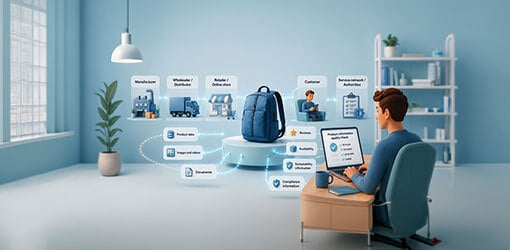
Read about our latest news
Find the latest updates, press releases, and announcements from our company. From new partnerships and client successes to product launches and industry recognition, our news page covers all the exciting developments happening at Solteq.
So stay tuned for the latest news and updates, and discover how Solteq is driving digital transformation forward.
Read the newsPlaces to be and things to do
Visit our events page to see our up-and-coming events and webinars. Our events bring together industry experts, thought leaders, and business professionals to share insights and best practices on topics such as digital transformation, e-commerce, customer experience, and more.
Whether you're looking to network with peers, learn from industry leaders, or discover the latest trends and technologies, our events page is for you to visit regurarly. Discover how Solteq can help your business stay ahead of the curve.
Visit the eventsTake a plunge and dive into business insights
You will find information on the latest trends, technologies, and strategies in digital transformation. Our team of experts regularly publishes webinars, podcasts, eBooks, and other types of insightful contents produced by Solteq or in cooperation with our technology partners.
Whether you're looking to stay up-to-date on industry trends or seeking inspiration for your next project, our insights page has something for everyone.
Dive into insightsSuccess Stories
Our customers come from various industries and backgrounds, but they all have one thing in common: a desire to improve their operations, customer experience, and bottom line through innovative technology solutions.
Collection of success stories showcases real-world examples of how Solteq has helped our clients achieve their goals, overcome challenges, and transform their businesses for the better.
Jump to success
About Solteq
Solteq is a Nordic IT service provider and software house. We are specialized in digital business solutions and vertical software markets.
From Company page you will find Solteq´s key figures and get to know our Executive team.
More about SolteqSolteq values expertise, teamwork and good everyday life
At Solteq, you work alongside top digital business experts in local and international customer projects. We offer a comprehensive selection of IT services and software solutions for the industrial, retail, utilities, and service sector.
We are continuously looking for new talents to join our growing company. The things that we value most are your skills and personality, and we offer everyone an equal workplace regardless of age, gender, education, ethnicity, religion, or other factors.
Visit Careers
Where we work
In addition to office life, we offer opportunities for hybrid and remote work.
Visit LocationsTechnical experts
We employ a wide range of technical experts in the fields of data and analytics, coding, technical consulting, quality assurance and testing, customer and system support as well as digital marketing.
More about Technical expertsSales and customer relationship management
Sales and customer relationship management professionals play a key role in ensuring Solteq's growth and an excellent customer experience. As a growth company that is becoming more and more international, we are in constant need of new experts.
More about SalesAdministration
HR, marketing and communications, financial management and IT are important support functions for the Solteq group. In these teams, versatile development projects, collaboration between different business functions and stakeholders, and the opportunity to create a career in a growth company that is becoming more and more international make daily work interesting and rewarding.
More about AdministrationYoung Professionals
We offer future talents an international platform for growth. Regularly, there are opportunities to transform an internship, summer job, or thesis into permanent employment. Young professionals typically work on digital services and solutions at our retail, utilities, and digital commerce focused business units.
More about Young ProfessionalsSee who we work with
We would not survive a day without our valued technology partners. Many services of Solteq are based on the world-class technologies provided by our partners. We believe that the key to success is cooperation with reliable, long-term collaboration partners.
Explore our PartnersDigital Marketing services
Data-oriented digital marketing management is able to make better decisions, create more impactful customer encounters, and increase sales.
Explore Digital MarketingSolteq as an investment
Solteq is a Nordic provider of IT services and software solutions specializing in the digitalization of business and industry-specific software.
Share & shareholders
Solteq is a Nordic provider of IT services and software solutions specializing in the digitalization of business and industry-specific software.
Releases & publications
Solteq is a Nordic provider of IT services and software solutions specializing in the digitalization of business and industry-specific software.
Governance
Solteq is a Nordic provider of IT services and software solutions specializing in the digitalization of business and industry-specific software.
Growth services
Accelerate your business growth with our tailored solutions. Harness the power of data-driven strategies, cutting-edge technology, and expert insights.
Content Management
A fast-paced media landscape with multiple used technologies requires scalable and efficient content management tools.
Learn moreEnterprise Resource Planning
Solteq's in-house developed ERP systems streamline business operations with efficient resource planning, inventory management, and integrated processes. ERP systems listed below are specifically designed to support trade industry and automotive industry.
Solteq Advisory services
Digital business transformations are no walk in the park. Solteq Advisory is a management consulting function that helps understanding where you are today and asssist you in navigating the path to success in digital commerce.
Explore Advisory servicesDesign services
We help you develop strong, flexible solutions that boost sales and support a coherent experience of your brand across channels.
User Experience and Design help ensure that your customers have a positive interaction with your company. Let us help you.
Explore Design servicesHeadless CMS
A fast-paced media landscape with multiple used technologies requires scalable and efficient content management tools. One place for all the content to be used everywhere needed.
Update content in one place and it’s visible in every channel and every language needed. Consumers expect an easy, fast, and personalized experience in digital channels, and we can deliver that with flexible and scalable headless cms and microservice architectures.
Explore Headless CMS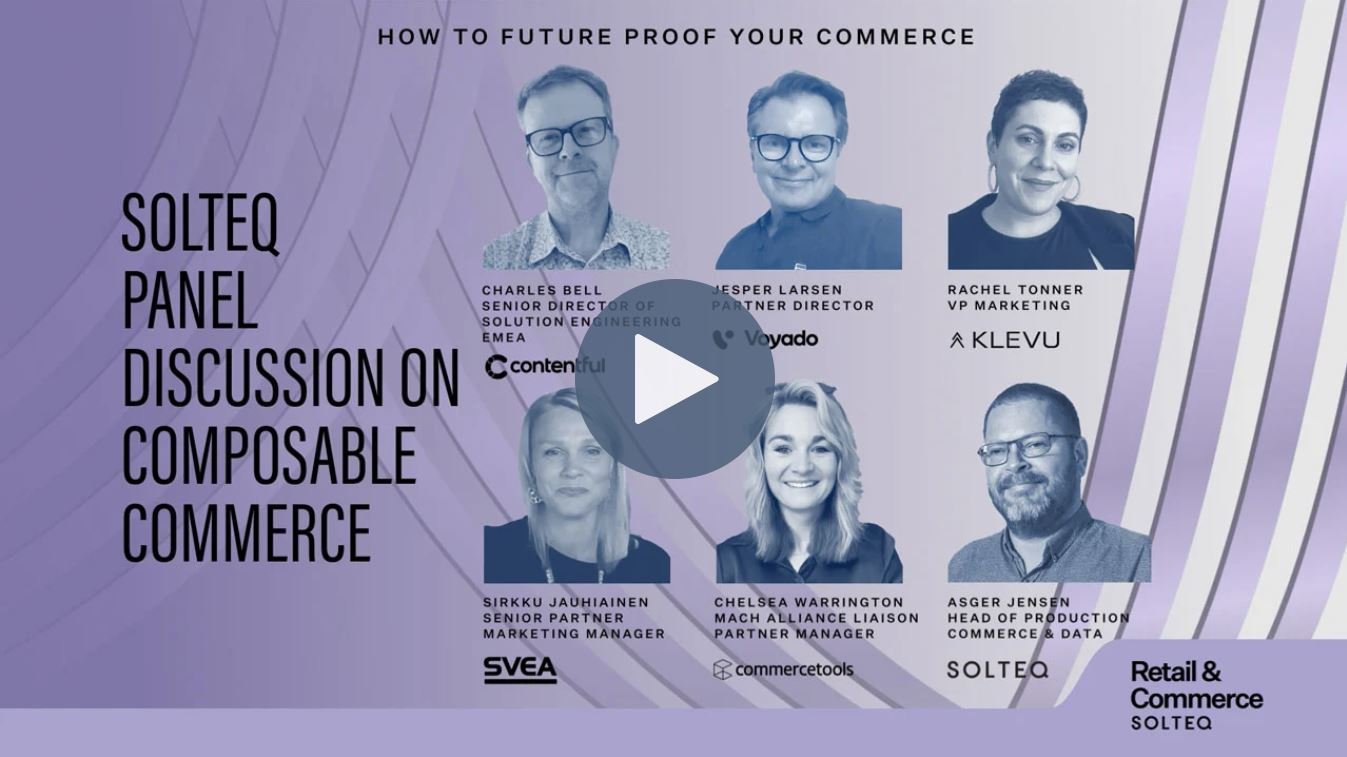
Solteq for Investors
Solteq is a Nordic provider of IT services and software solutions specializing in the digitalization of business and industry-specific software.
For InvestorsArtificial intelligence (AI)
AI isn't the hard part anymore. Figuring out which AI projects actually matter for your business is. We help you cut through the noise and focus on what delivers real results.
Explore AI ServicesSimplifiers
Simplifiers is the podcast that cuts through the complexity of digital transformation to reveal what works.
Created by Solteq, hosted by Amel Gaily, and built for anyone who believes clarity beats complexity - every time.
Start listening
Let's connect!
We provide software solutions and IT expert services to the energy sector, retail industry, and the needs related to e-commerce.
Manufacturing
Digital solutions for manufacturers, from dealer and partner portals to aftermarket services and installed base management.
Explore Manufacturing IndustryDigital Experience Platforms
A Digital Experience Platform (DXP) creates a unified digital backbone, connecting data, systems, and customer journeys across your business.
Explore DXP